Boardgame · Physical Challenges · Science
Ready for Launch?
Order EscapeGravity today. We'll ship to your door!
🔒 Secure payment via Razorpay. Your card/UPI details are never stored on our servers.
Join Playtesting
Drop your WhatsApp number. We'll ping you to find a weekend and time for a playtest session in your locality.
EscapeGravity
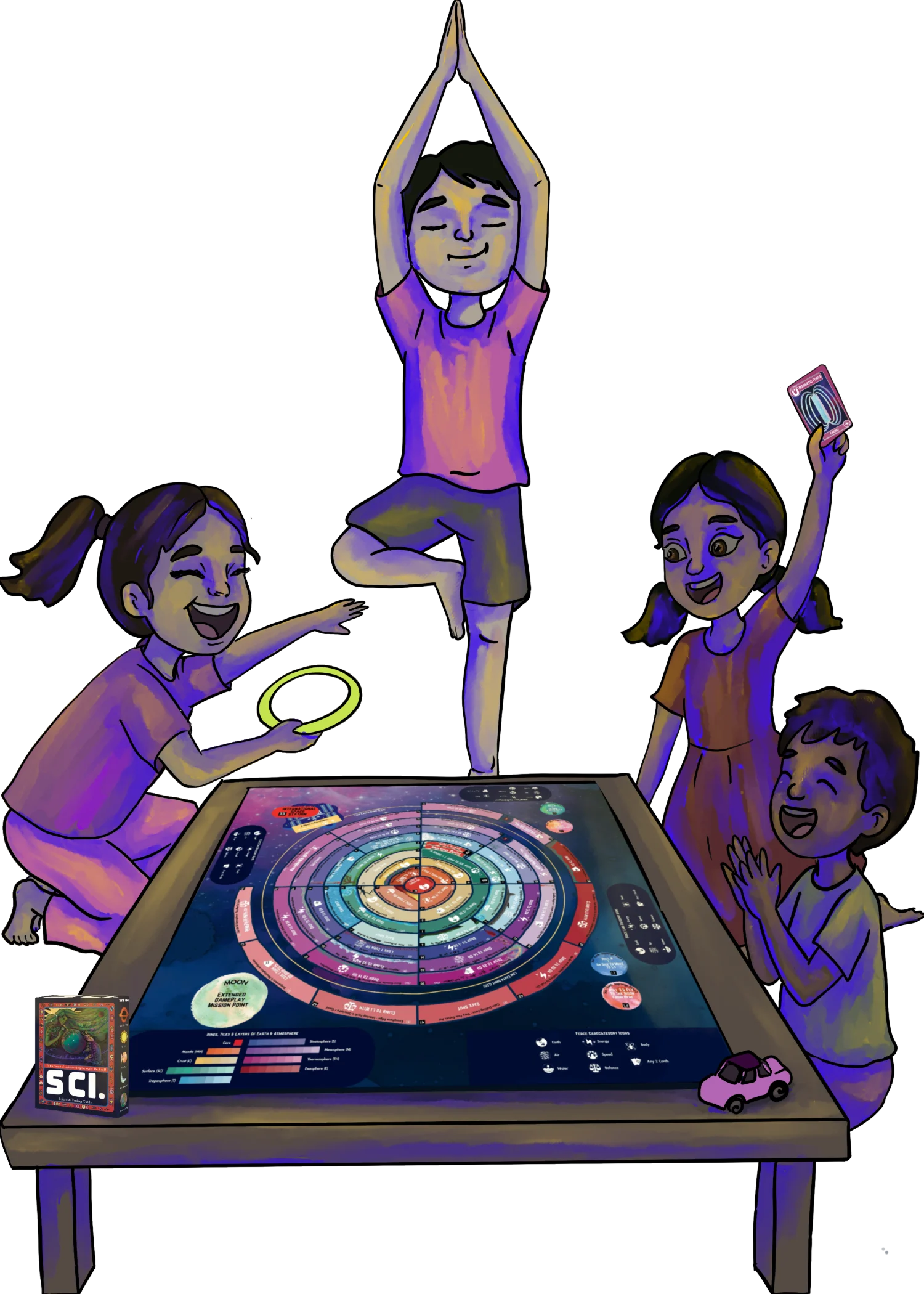
Your mission is to dock at the International Space Station. You start on the Earth’s surface and roll dice to spiral up towards the ISS, against gravity that is trying to pull you into the core and consume you. The board is gravity’s agent — every tile is a gravity well. Play Force Cards to EscapeGravity, and earn Force Cards by doing physical challenges: balance on one leg, blow a feather, drop objects to see which falls last, and more.
- 🏉35+ physical challenges. Kids experience science — they don’t just memorise it.
- ⚡13 Forces, split into 7 categories: air, water, earth, energy, speed, balance & body — see the whole list.
- 🌐A spiral board running from the Earth’s core out to deep space, every tile a gravity well.
- 🎮Kit items in the box to do the challenges with — cars, clay, a frisbee, balls and more.
- 🔄Zero screens, and high replayability — no two games run the same way.
- 💡The learning lands intuitively over a few games. But even the first one kicks off the deep thinking.
The Learning Glossary lists everything your kids — and even you — would learn from the game.
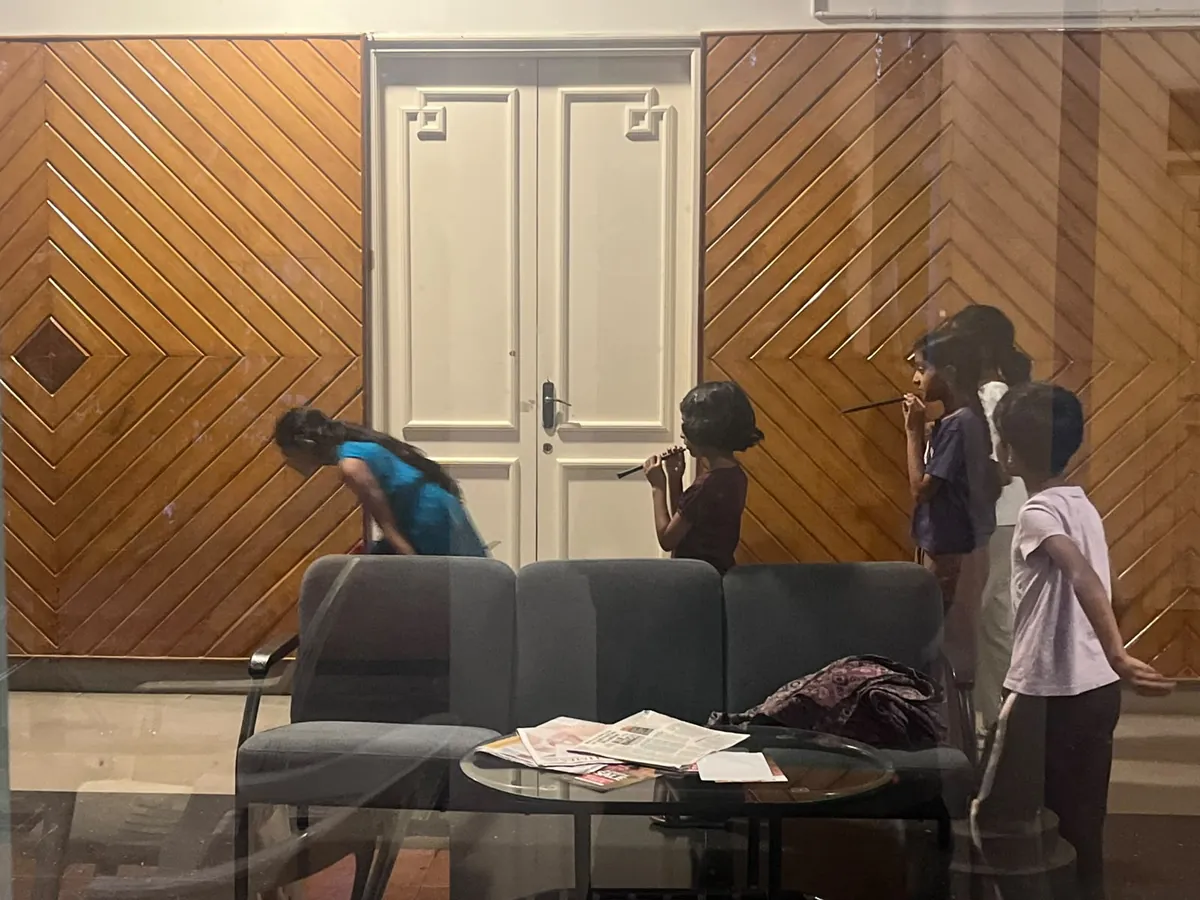
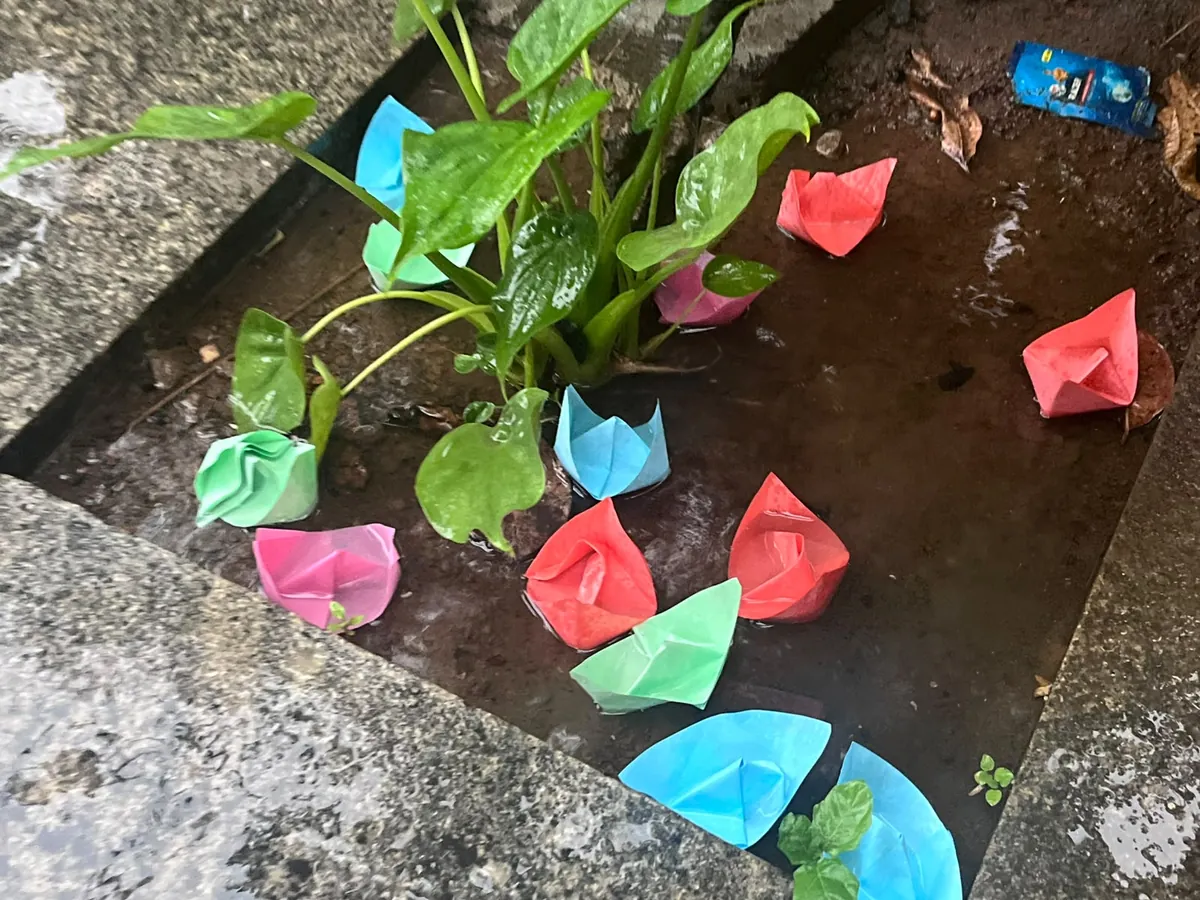
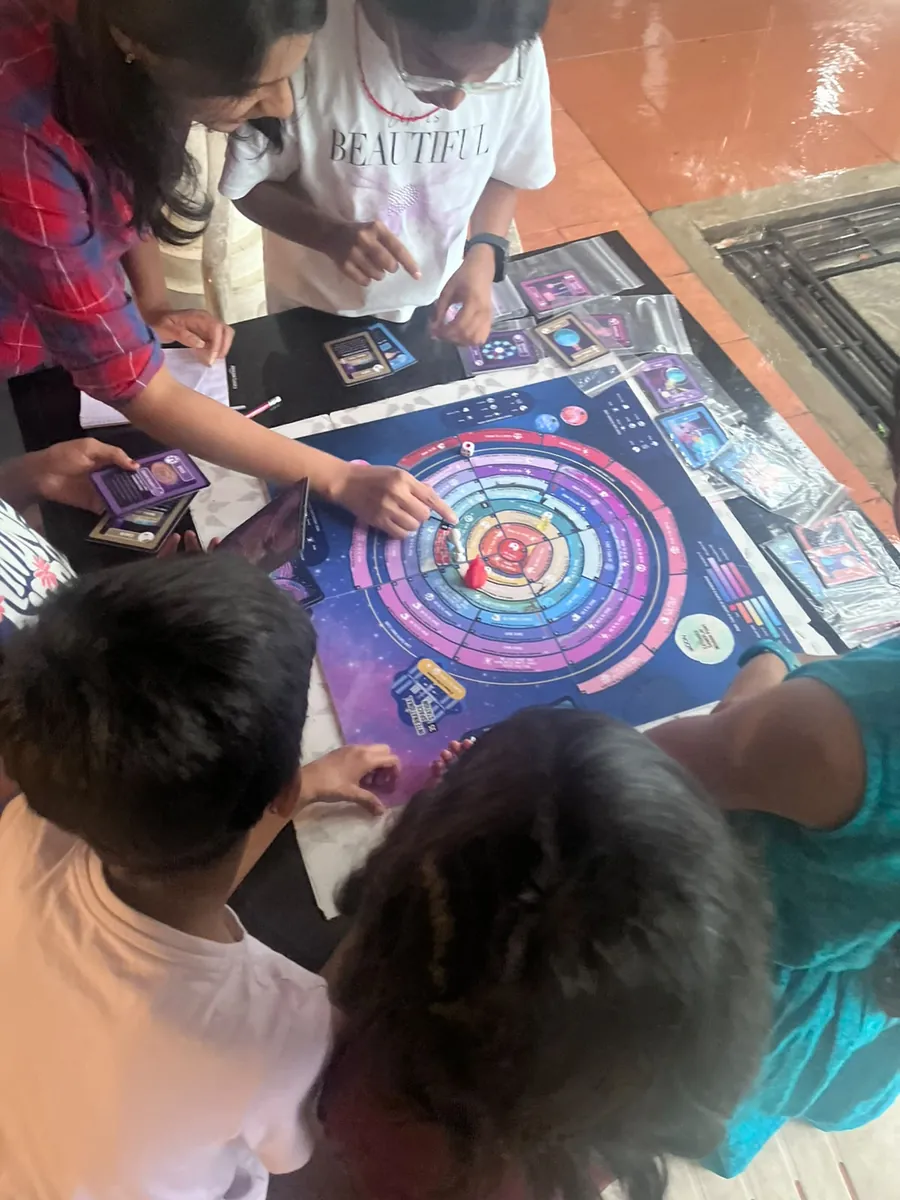
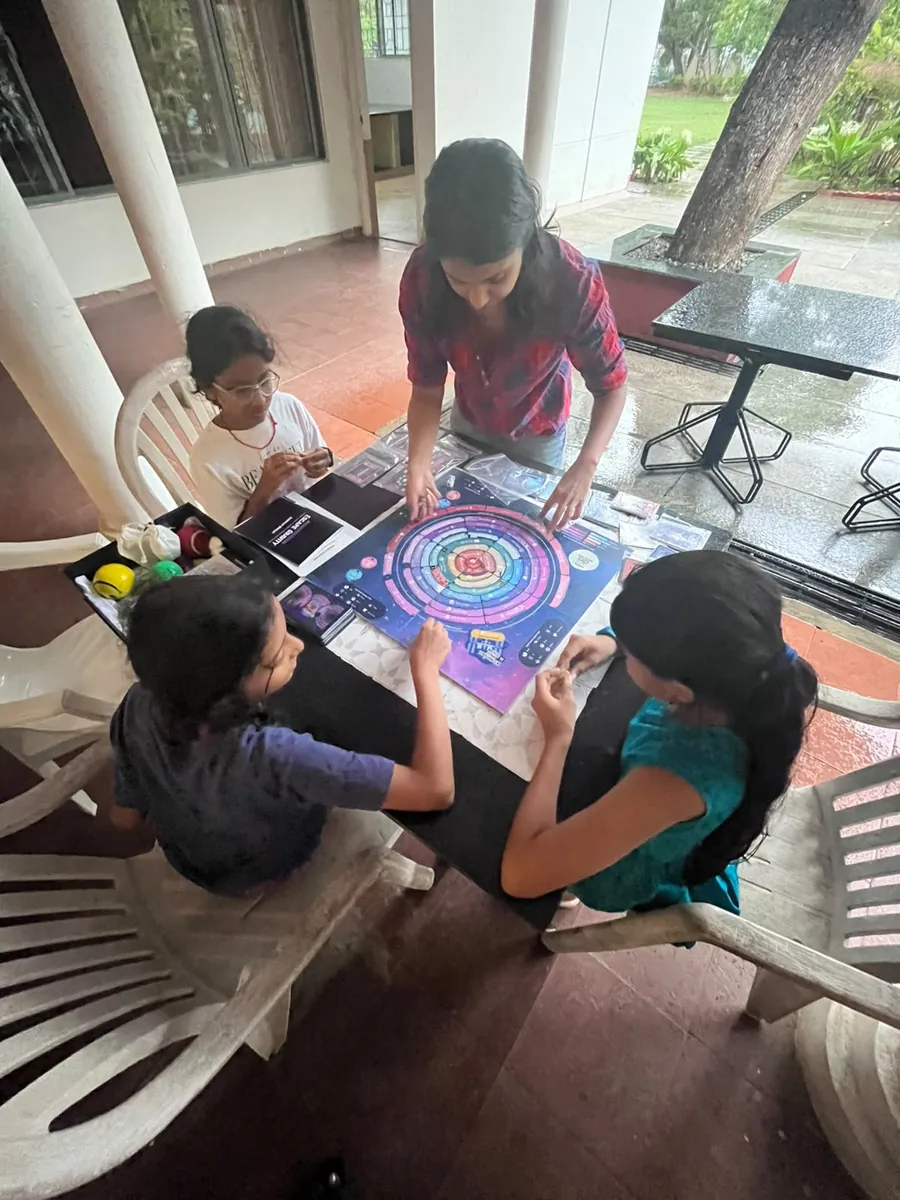
Kids Playing EscapeGravity
Real kids. Real fun. Real science.


Kids To DeepKids
Your child will fall in love with science
Dear parents — your child won't just play a board game. They'll start correcting you at dinner, questioning teachers at school, and spotting science in places you never thought to look.
What Playtest Parents Say
“Such a fun game — the kids enjoy the physical challenges so much they don't even realise how much they're learning.”
Playtest parent · two kids, 7 & 10
“Finally, screen-free engagement that's actually enriching. My daughter now explains gravity and air resistance to me.”
Playtest parent · 9-year-old
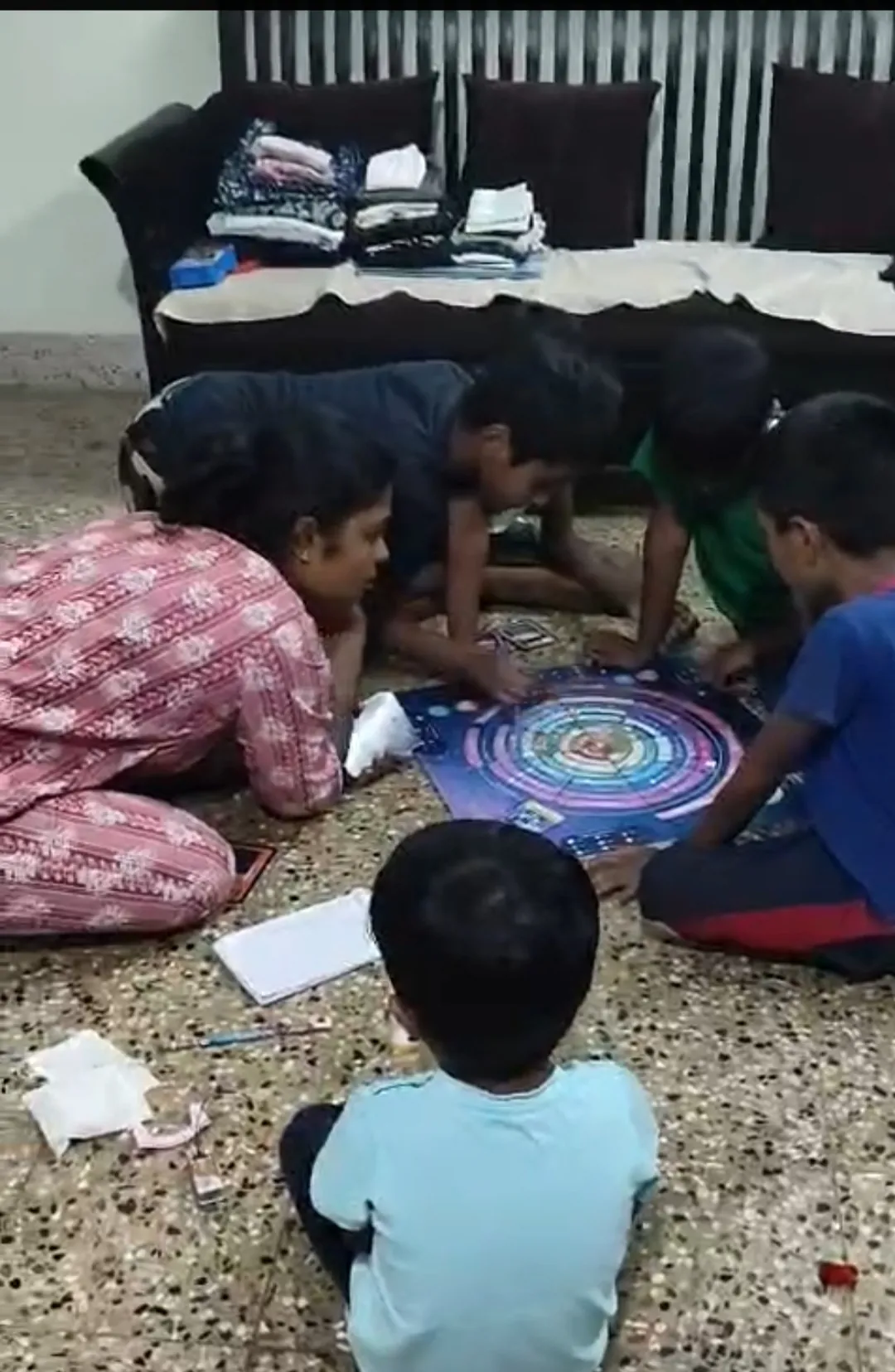
“He knows so much now about forces, the Earth, its atmosphere… When school gets to these topics, I'm sure he'll ace them.”
Playtest parent · 8-year-old4 “Facts” About Gravity That Are Wrong. #Unlearn
You wouldn't believe how much of what we accept as facts are simply false — across topics. We did the research for you, and we hope to fix some holes. These are just 4 examples. About gravity.
If you said gravity...
EscapeGravity covers all of this and more — deeply researched, first principles, the full picture.
EscapeGravity Board Game
Mission: Reach The International Space Station
Start on Earth's Surface and race toward the ISS. The board is Gravity's agent — pulling you down into the core to consume you. Fight back using Force Cards, earned by completing Physical Challenges.
Gravity Is Experienced, Not Just Read In Books
Over 35 physical challenges let players feel the forces at work — balance, speed, air resistance, gravity itself. Every challenge is a real-world experiment hiding in plain sight.
Drop different objects
Yoga balance poses
Blow feathers with hairdryers
Roll a car off the table
Spin on the board
Tug of war
Drop paper vs crumpled paper
Balance books on your head
Throw a ball as high as you can
Solve puzzles at the tableForces Against Gravity
Nothing exists alone in nature — true for gravity too. Every force interacts with others: some reinforce, some resist, and together they shape how everything moves.
The game reflects this. There are 13 forces across 7 categories — players earn these force cards by doing physical challenges, then use them to escape the gravity wells on the board.


Spirals In The Universe
The board is a spiral — because gravity, when met with motion and energy loss, manifests as spirals everywhere in the universe.


Scroll, click or double-click to spin

_(cropped).webp)

_(cropped).webp)


Each Ring Is A Layer Of Earth Or Its Atmosphere
9 concentric rings on the spiral board map to 9 real layers — from Earth’s core to outer space.
Each Tile Carries Science
54 tiles — each with a scientifically accurate quip explaining exactly why that gravity well exists and how the forces at that altitude shape the game.
Why ₹4,999?
It's a fair question, and here's the honest answer — exactly what goes into the box, and why this isn't another mass-made product.
Made with care, not on an assembly line.
Learning Glossary
Every concept a child takes away from playing EscapeGravity a few times — 13 forces, 11 layers of Earth and sky, and 12 ideas most books hold back until Class 11.
The ground pushing back. It is electromagnetic — the atoms in your shoe refusing to share space with the atoms in the floor. Nothing ever truly touches.
Air is a fluid, and shoving through it costs you. This — not gravity — is the only reason a feather loses a race to a stone.
Move a wing through air fast enough and the air pushes it upward. Birds, aeroplanes and a well-thrown frisbee all beat gravity with the same trick.
Push water out of the way and it shoves back with the weight of exactly what you moved. Float or sink comes down to that one comparison.
Not the same thing as mass. Weight is what gravity does to your mass, so it changes with where you stand. Your mass never does.
Force applied across distance. Every metre you climb is work done against gravity — which is precisely why stairs are tiring and lying down is not.
Travel sideways fast enough and the ground curves away as quickly as you fall toward it. That is an orbit: falling forever and always missing.
11.2 km per second from Earth’s surface. Hit that and you never come back down — no engine needed for the rest of the journey.
A force that ignores gravity completely. And not all metals feel it — iron, nickel and cobalt do; aluminium and copper simply don’t.
Bend something springy and it quietly stores your push. Let go and it hands the whole lot back — a catapult, a bow, a diving board.
The one force in the box you cannot touch. Every single thing humans built to leave the ground started as somebody working something out.
The single point gravity acts through. Keep it over your feet and you stand; let it wander past them and you are already falling.
Where opposing pulls cancel and you hang without falling — the same idea that makes a Lagrange point out in space actually work.
Fall all the way here and the Earth pulls you in every direction at once — so it cancels. You would be weightless at the exact centre. Crushed, but weightless.
Solid rock that flows like treacle over millions of years. And gravity doesn’t fade as you sink through it — it climbs, peaking right at the bottom of this layer.
The thin skin we live on — less than 1% of the way to the centre. Every hole humanity has ever dug is still inside this layer.
Where the race begins, at about 9.8 m/s². Climb from here and gravity fades away. Dig from here and it gets stronger first — before collapsing to nothing at the centre.
Where every cloud, storm and aeroplane lives. Three quarters of the atmosphere’s entire mass is squashed into this bottom layer alone.
Home of the ozone layer — and it gets warmer as you climb, not colder, because ozone up there is busy absorbing ultraviolet on your behalf.
The coldest place in the whole atmosphere, and where meteors burn up. Too thin to fly a plane in, too thick to hold an orbit in.
Thousands of degrees — and you would still feel freezing. The molecules are so far apart there is almost nothing there to hand you the heat. Auroras happen here.
400 km up, and still sitting in about 90% of Earth’s gravity. It stays up because it is moving sideways at 7.66 km/s — it falls, and misses.
Where the atmosphere gives up and quietly becomes space. An atom out here can travel hundreds of kilometres before it meets another one.
Spots where the Earth’s pull and the Sun’s pull cancel each other out. Park a telescope there and it stays put for free — which is where James Webb is right now.
Einstein’s answer: mass bends spacetime, and everything simply follows the bend. Most books won’t say this to a child. We do, at seven, because they handle it fine.
A clock at sea level ticks slower than one on a mountain. This isn’t a theory to argue about — GPS satellites correct for it every single day or your maps would drift kilometres off.
Not at the centre, and not at the surface either. It maxes out at the core–mantle boundary at about 10.7 m/s², then falls to exactly zero at the Earth’s centre, where every direction pulls equally.
Climb and gravity fades, but it never quite reaches zero anywhere. The Sun is still holding on to Neptune from four and a half billion kilometres away.
Astronauts float because they are falling, not because gravity ran out. Up at the ISS there is still roughly 90% of what you feel on your sofa.
Mass is how much of you there is, and it is the same everywhere in the universe. Weight is just a conversation between that mass and whichever planet you happen to be standing on.
Gravity varies slightly from place to place depending on how dense the rock beneath you is. Satellites have mapped the lumps — the planet is not a smooth ball of pull.
One locks you into a circle forever, the other lets you leave for good. The gap between the two is only a factor of about 1.4 — surprisingly little.
Five places where the Earth’s and the Sun’s pull balance so precisely that an object can just sit there. We put our best telescopes in them.
The Normal Force is electromagnetic. What your child feels as a solid floor is the repulsion between electrons refusing to let two lots of atoms occupy the same spot.
Heavier objects don’t just tug harder — they bend spacetime deeper. The well gets steeper, and climbing back out of it costs correspondingly more.
A hammer and a feather, dropped together with no air in the way, land together. Apollo 15 filmed exactly that in 1971, and you can still watch it.
In the game none of this is taught — it is earned. Your child performs the physical challenge, wins the matching force card, then has to work out which gravity well that card beats. The explanation comes last, which is why it stays.
Every Turn Is A Lesson
Do → Wonder → Earn → Understand. Every turn weaves a physical challenge, a thinking cue, and a force card into one moment — so the science isn’t just read, it’s lived and connected.
The car rolls off the table and curves — it doesn’t fall straight down. That curved path is sideways velocity in action. The force card explains exactly the concept the challenge just demonstrated.
Spreading your arms shifts your center of gravity back over your base — that’s why balancing gets easier. The force card explains the very science the players just felt in their body.
Learning Comes Full Circle
The science you learn through challenges and force cards isn't just for collecting — you use it to survive gravity wells on the board.
You play 2 Speed Cards — Escape Velocity & Sideways Velocity — to reach the ISS.
These are the 2 velocities needed in reality to reach & stay in orbit. All the fuel is burnt to achieve these two speeds.
Rough ocean waves drag you down. You play the Water — Buoyancy card to stay afloat and avoid dropping to tile 0.
The buoyancy force that pushes objects up in water — the same science you explored in the physical challenge — keeps you in the game.
You land on a cliff edge. You play the Balance — Center Of Gravity card to stay or fall down to a lower tile.
The same concept you discovered in the One Leg Balance challenge now saves your game.
How To Play
An Example Interactive Experience
Click to Roll!
Escape The Gravity Wells Mini Game
Collect force cards and survive the gravity wells. Tap or press Space to jump.
Quick Quiz
How well do you know gravity? 12 questions — no pressure, just fun.
Frequently Asked Questions
Educational Board Game Features
Physical Challenges
Move, stretch, balance! The board demands real-world actions that bring the game to life.
Science Learning
Physical challenges connect gravity & forces to real motion, while thinking cues deepen understanding every turn.
Strategic Gameplay
Plan your moves carefully. Every decision affects your orbit and your chance of reaching the ISS.
Multiplayer Fun
2-6 players race to escape gravity together. Alliances form, rivalries ignite!
Beautiful Art
Hand-illustrated cards and board bring the wonders of space to vivid life.
Replayability
Random events, shuffled cards, and branching paths make every game unique.
More Worlds From DeepKids
EscapeGravity is just the beginning. We're building a universe of games, cards, and books that turn deep concepts into unforgettable experiences.
Launching next: The Story Of Evolution picture book. See the book →


Earth Force Card